Why Art Experiences Elevate Conferences & Wellness Fairs
A conference can fill a room with smart people and still leave them drained. A wellness fair can offer great resources and still feel like another line of tables, brochures, and too many trinkets. Art changes the atmosphere because it gives people something to do, feel, make, and belong.
That matters because many attendees arrive carrying stress. Some are over-extended from work demands. Some feel disconnected and not part of their team. Some want support but do not want another lecture about self-care. A hands-on art experience offers a different entry point. It invites people to pause, use their senses, make choices, and connect with others without the pressure to perform or be perfect.
Research has been building around this for years. In the United Kingdom, Dr. Daisy Fancourt and colleagues have helped bring wider attention to the links between arts participation, mental well-being, social connection, health behavior, and longevity. Their work, along with studies from other researchers in psychology, public health, neuroscience, and organizational behavior, points to a practical truth: creative participation can support both personal wellness and better group dynamics.
For conference planners, wellness coordinators, and event teams, art is not a decorative extra. Planned thoughtfully, it can become one of the most memorable impact a participant experiences at the conference.

Art participation supports mental well-being in a way lectures often cannot
Many wellness events focus on information. That has value, but information alone does not always help people feel calmer or more connected in the moment. Art participation engages the body, attention, emotion, and imagination at the same time.
When someone paints, shapes clay, writes a short poem, adds color to a shared mural, or builds a small collage, they shift from passive listening to active participation. That shift can be powerful.
Creative activity can support well-being through several key areas:
It gives the mind a clear focus.
It creates a break from repetitive worry.
It offers a safe outlet for emotion without needing words.
It encourages play, which many adults rarely experience.
It gives people a social act of participation with others.
This does not mean art replaces other forms of wellness, therapy or medical care. It does mean that art can be a strong wellness practice in public, group-based settings. For many people, making something with their hands feels more approachable than talking directly about stress, grief, burnout, or anxiety.
Dr. Daisy Fancourt’s research has explored how arts and cultural engagement relate to health and well-being across large populations. Her work has helped show that the arts are not only entertainment. They can form part of a broader ecosystem of care, prevention, and social support.
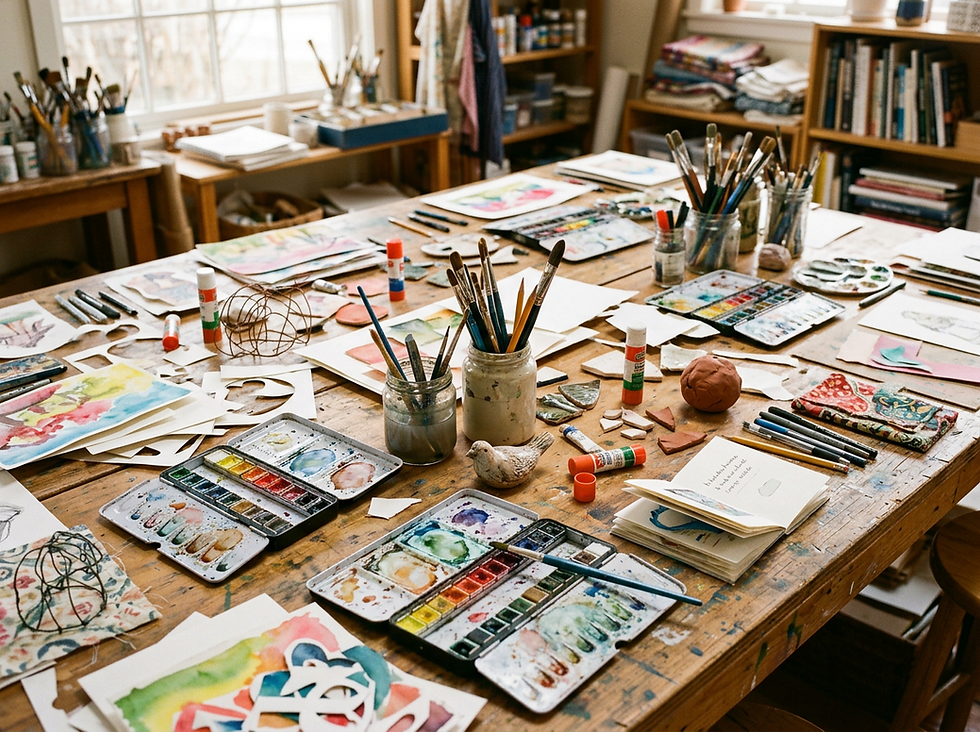
The strongest event experiences do not ask attendees to produce “good” art. They create conditions where people can relax into the process. A watercolor station, collaborative art, guided mandala activity, community sculpture table, or reflective writing space, can all work when the goal is presence rather than perfection.
Art helps lower stress by changing attention and pace
Stress thrives in overstimulation, overwhelm, and disconnected teams where one person is carrying the load. Conferences often combine travel, crowded rooms, tight schedules, constant conversation, and long periods of sitting. Organizations put a lot of thought and investment into annual wellness fairs can also become noisy and busy, even when the purpose is supportive.
Art adds a different rhythm.
A creative station can work like a decompression zone. People step away from the flow of the event and enter a task that has texture, color, movement, and choice. Even a short creative break can help people reset their attention.
This happens partly because art-making often creates a state of absorbed focus. The mind follows the brush, the line, the pattern, or the material. Breathing slows. The body settles. The person has permission to stop scanning the room and start paying attention to one thing. The to-do list melts away and they can just be.
That kind of pause is valuable at any event, but it is especially useful when burnout is part of the theme.
Burnout is not only tiredness. It can include emotional exhaustion, cynicism, reduced motivation, and a sense that nothing restores energy anymore. A good art experience will not resolve the causes of burnout, such as workload, lack of control, or poor support. It has been shown to help prevent it, and it can help people reconnect to agency and self-expression to navigate better behaviors, boundaries, and solutions.
A small act of creative choice can feel surprisingly restorative:
Choosing a color.
Tearing paper into a shape.
Adding one section to a group mural.
Writing a word or poem that captures a current feeling.
Building a tiny object that represents community.
Those actions may look simple, but they offer a moment of authorship. For someone who spends much of the day responding to demands, that matters.

Shared making builds social connectedness without forced networking
Many conferences try to create connection through mixers, icebreakers, or networking breaks. Some people enjoy those formats. Others find them draining or awkward.
Art creates another path. It lets people connect side-by-side, not face-to-face under pressure. Two strangers can talk while adding leaves to a paper tree, arranging mosaic tiles, or painting sections of a shared banner. The activity carries part of the social weight and bridges team belonging and connectedness.
That is one reason art experiences work so well at large conference events. They reduce the pressure to introduce oneself, perfectly recite the elevator speech, or feel awkward meeting someone new. Conversation can start with what is happening in front of people:
“I like that color.”
“What are you making?”
“This part reminds me of the coast.”
“Can I add something here?”
These small exchanges help create belonging. They also make the event feel less transactional. Instead of moving from table to table gathering handouts, attendees help build something together.
Research on arts participation often points to social connection as one of the key benefits. Group arts activities can create shared identity, reduce loneliness, and give people a reason to interact across roles or backgrounds. This is especially valuable in nationwide event settings where attendees may come from different regions, industries, age groups, and life experiences.
Collaborative art also leaves a visible trace of participation. A completed community mural or installation says, “People were here together. They contributed.” That visible record can become a focal point for the event and a reminder of the shared experience long after the event.
Art strengthens emotional regulation and empathy
Wellness is not only about reducing stress. It also involves recognizing emotions, responding to them with care, and understanding the experiences of others. Creative experiences can support all three.
Art-making gives emotions a form. Someone might use dark colors to express heaviness, repeating patterns to create calm, or layered paper to show complexity. The work does not need to be explained to be meaningful. The act of creating can help feelings become more manageable because they are no longer only internal.
This is one reason expressive arts practices appear in many therapeutic, educational, and community health contexts. Again, a conference art station is not therapy unless led by qualified professionals in that frame. Yet it can still use gentle, trauma-aware principles, be a warm welcoming space that:
Offers choice.
Avoids forcing personal disclosure.
Makes participation optional.
Uses open-ended prompts.
Provides quiet space when possible.
Treats all creative art with respect.
Art can also build empathy. Looking at someone else’s creative art can reveal feeling without demanding a debate or a long personal story. A shared prompt such as “What does resilience look like?” may generate images of roots, bridges, waves, shelters, stars, open roads, or hands. Each response expands the group’s sense of what resilience can mean.
That kind of perspective-taking matters in workplaces and communities. Empathy improves how people listen, respond, and collaborate. It can also reduce the sense of isolation that often feeds burnout.

Creative experiences can increase innovation in the workplace
Innovation does not grow from pressure alone. People need time to notice patterns, make unlikely connections, test ideas, and recover from mental strain. Art supports those conditions.
Creative participation builds mental flexibility. When people make art, they practice working with uncertainty. They try something, respond to what happens, adjust, and keep going. That process is close to the way good ideas develop in teams.
Art also helps people step out of habitual roles. A person who is usually expected to analyze data may discover a playful visual style. A manager may become a beginner again. A quieter participant may express an idea clearly through image or form. These shifts can loosen fixed assumptions about who contributes and how.
For conferences, this can be especially useful when the agenda includes problem-solving, leadership, culture, or change. A short creative session before a strategy conversation can help people enter the conversation with more openness. A visual reflection activity after a keynote can help attendees process what they heard and turn it into something personal.
The goal is not to turn every participant into an artist. The goal is to create a setting where people can think with more range.
Good workplace creativity often depends on three things:
Psychological safety
Diverse perspectives
Rested attention
People need to feel safe enough to offer unfinished ideas.
People need ways to see beyond their own assumptions.
People need enough mental space and rest to notice new possibilities and make good decisions
Art experiences can support all three. They lower the stakes, invite many forms of contribution, and give the mind a break from purely verbal or analytical activity.
This is why the benefits reach beyond personal wellness. Art can help groups become more adaptable, curious, and willing to experiment without fear of failure.
Longevity research makes the case even stronger
One striking area of research links arts and cultural engagement with longevity and healthier aging. Studies led or influenced by researchers such as Dr. Daisy Fancourt have examined how activities like visiting museums, attending cultural events, or participating in creative practices relate to long-term health outcomes.
These studies do not claim that art alone guarantees a longer life. Human health is shaped by income, access to care, relationships, environment, genetics, safety, and many other factors. Still, the research suggests that arts engagement may be part of a healthy life, especially because it connects to social contact, meaning, emotional health, and ongoing learning.
That matters for conference and wellness fair design because events are often short-term. Planners may wonder whether a 20-minute art activity can really matter. The answer is that one activity is not the whole story. It can still be a meaningful doorway to experience creativity more often. An art activity can be the bridge a participant needed for hope, encouragement, social connection, or a moment of self-reflection.
A person may attend a wellness fair, enjoy a guided collage activity, and remember that making things helps them feel grounded. They may return to drawing, quilting, photography, journaling, music, or community art classes. A team may experience a collaborative mural and decide to build more creative reflection into future gatherings.
The event becomes a spark.

What makes an art experience work at a conference or wellness fair
The best art experiences feel inviting and warm, not performative. They are easy to enter, simple to understand, and flexible enough for different comfort levels.
A strong setup usually includes:
Clear instructions with visual examples
People should understand the directions and how to participate in under a minute.
Low-pressure materials
Watercolor, collage, markers, clay, and natural materials work well because they do not require advanced skill.
A welcoming facilitator
The facilitator sets the emotional tone. A calm, encouraging presence matters more than technical instruction.
A visible purpose
Tie the activity to the event theme. Examples include rest, resilience, belonging, gratitude, renewal, or future vision.
Flexible timing
Some people may spend three minutes. Others may stay for 20. Both should feel acceptable.
Sensory care
Avoid strong toxic chemical smells, overly messy materials, or cramped layouts when possible. Offer seating and standing options.
Inclusive design
Think about mobility, vision, language, neurodiversity, and cultural sensitivity. Participation should not depend on one narrow ability or background.
There is also value in offering both individual and collective options. Some attendees want a private moment. Others enjoy building something as a group. A wellness fair might include a take-home affirmation card station plus a shared mural. A conference might include a quiet sketching space plus a collaborative installation tied to the event theme.
Art belongs in the center, not the corner
At too many events, art is left out, framed as something optional for people who “like that kind of thing.”
Another approach is to place creative participation within the event’s wellness strategy. That means giving it enough space, time, and care for teams to experience the health benefits of art participation.
For example, an event agenda could include:
A creative workshop activity focused on wellness.
A collaborative art wall that grows throughout the day.
A guided reflection after a panel or workshop.
A quiet creative reset area near the wellness resources.
A drop-in art station where participants can join for a few minutes or longer to make their own unique artwork.
This approach makes art part of how people process the event, not just something they pass by.
It also honors different ways of learning, absorbing the topics of the conference, and socializing. Some people process through conversation. Others process through movement, color, texture, silence, or metaphor. This creates a deeper impact on the conference speaker topics, learning agenda, and provides a visual reminder that participants can take home feeling proud of their contribution.
The takeaway for event planners and wellness leaders
Art experiences elevate conferences and wellness fairs because they meet real human needs. They help people slow down, regulate emotion, express what is hard to say, and connect without forced interaction. They can reduce stress in the moment and support habits that contribute to long-term well-being.
The research base, including the work of Dr. Daisy Fancourt and other scholars studying arts, health, and social connection, gives weight to what many people already sense from experience: making art can help people feel more alive, more connected, and more capable of imagining what comes next.
For any event focused on wellness, culture, leadership, or innovation, art is more than a pleasant add-on. It is a practical tool for helping people recover attention, reduce stress, build trust, and think in new ways.
The next time a conference or wellness fair is planned, stop and ask, “Where can we fit an art station?”
Ask what people need to feel, release, understand, and create together. Then design the art experience to support the participant well-being, whole person, so the attendees get the most out of the conference.


Comments